What Is the Best First Instrument for a Child? A Parent’s Guide to Getting Started
Choosing your child’s first musical instrument is an exciting milestone. But with so many options—piano, violin, guitar, drums, and more—how do you know which one is right?
Many parents wonder whether one instrument is easier to learn than another, whether their child is old enough to begin lessons, or whether starting with piano is necessary before exploring other instruments.
The good news is that there is no single instrument that is best for every child. The right choice depends on your child’s interests, physical development, personality, and the kind of musical experience that will inspire them to keep learning.
At Maestro Musicians Academy, we believe that a successful musical journey begins not with choosing the “perfect” instrument, but with helping children discover the joy of making music.
Is Piano the Best First Instrument?
Piano is often recommended as a first instrument, and for good reason.
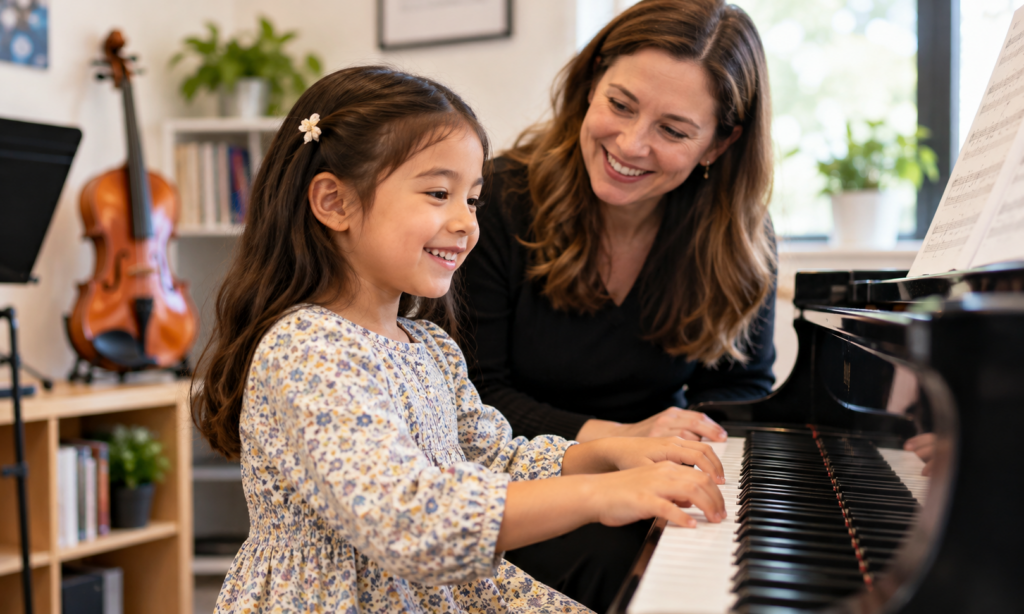
Unlike many other instruments, the piano allows children to produce a clear, recognizable sound simply by pressing a key. They don’t initially need to worry about controlling a bow, positioning their lips, or coordinating their fingers to produce a note.
The keyboard also provides a visual representation of musical relationships. Notes move from low to high in a predictable pattern, helping children understand melody, harmony, and musical structure.
Advantages of starting with piano include:
- Producing a pleasant sound from the very first lesson
- Developing coordination between the hands
- Learning to read music in both treble and bass clefs
- Building a foundation in rhythm, melody, and harmony
- Exploring many musical styles, from classical to contemporary
Piano can be an excellent starting point for children who enjoy patterns, puzzles, and discovering how things work.
However, piano is not a prerequisite for learning other instruments. A child who dreams of playing violin or guitar does not need to study piano first.
Is Violin a Good First Instrument for Young Children?
Absolutely! Violin can be a wonderful first instrument, particularly for children who are drawn to its expressive sound.
Unlike piano, violin requires students to develop careful listening skills from the beginning. Children learn to recognize differences in pitch, control the movement of the bow, and coordinate both hands.
Because violins come in smaller sizes, young children can begin with instruments suited to their physical development.
Benefits of learning violin include:
- Developing attentive listening and pitch awareness
- Improving fine motor coordination
- Encouraging patience and concentration
- Learning to express emotions through music
- Preparing for future participation in orchestras and chamber ensembles
Violin can be particularly rewarding for children who enjoy singing melodies and listening closely to music.
Parents should understand, however, that producing a beautiful violin tone takes time. The early stages can sound less polished than beginning piano lessons. With patient teaching and encouragement, children gradually discover how to create a rich, expressive sound.
What About Guitar?
Guitar is another popular choice, especially for children who enjoy singing, popular music, or accompanying themselves.
Children can begin with appropriately sized guitars, although finger strength, hand size, and coordination are important considerations.
A nylon-string classical guitar is often a comfortable starting point because its strings are generally gentler on beginners’ fingertips than steel strings.
Guitar lessons can help children:
- Develop rhythm and coordination
- Learn melodies and chords
- Explore classical, folk, rock, and popular music
- Build finger strength and dexterity
- Experience the satisfaction of playing familiar songs
Guitar may be especially motivating for children who already have favorite songs they want to learn.
As with violin, progress requires patience. Pressing strings accurately and changing finger positions can be challenging at first, but these skills become more natural with practice.
Are Drums a Good First Instrument?
For children who love movement and rhythm, drums can be an excellent introduction to music.
Some parents worry that percussion lessons are simply about making noise. In reality, studying drums requires concentration, listening, coordination, and considerable self-control.
Students learn to maintain a steady beat, recognize rhythmic patterns, and coordinate movements between their hands and feet.
Drum lessons can be particularly appealing to energetic children who enjoy physical engagement with music.
Benefits of studying drums include:
- Strengthening rhythmic awareness
- Developing coordination and timing
- Learning to listen and collaborate with other musicians
- Practicing concentration and self-regulation
- Building confidence through achievable musical goals
Children do not necessarily need a full drum set to begin. Depending on the teacher’s recommendations, a practice pad and drumsticks may be sufficient for some introductory exercises.
What Is the Best Age to Start Music Lessons?
Children develop at different rates, so chronological age is only one consideration.
The following guidelines can help parents begin thinking about instrument choices:
| Instrument | Common Starting Age |
|---|---|
| Piano | 4–6 years |
| Violin | 4–6 years |
| Guitar | 6–8 years |
| Drums | 5–7 years |
| Cello | 5–7 years |
| Voice | Age-appropriate singing activities can begin early; formal instruction depends on development |
These are general guidelines rather than strict requirements. Some children are ready earlier, while others benefit from waiting.
A child’s ability to follow simple directions, participate in a lesson, and engage with an activity is often more important than reaching a particular birthday.
An experienced music teacher can help parents determine whether a child is ready for individual lessons.
Should Parents Choose the Instrument, or Should the Child?
This may be the most important question of all.
Parents naturally want to guide their children toward activities that will benefit them. Sometimes that means encouraging a child to explore an instrument they have never considered.
However, a child’s genuine interest is one of the strongest foundations for sustained musical learning.
A child who loves the sound of the cello may be more motivated to practice cello than piano, even if piano seems like the more practical starting point.
Likewise, a child fascinated by drums may thrive in percussion lessons rather than reluctantly attending violin lessons.
Our recommendation is to involve your child in the decision whenever possible.
Listen to recordings of different instruments together. Attend a concert. Watch musicians perform. Ask your child which sounds they find exciting or beautiful.
Then consider arranging an introductory lesson so your child can experience the instrument firsthand.
What If My Child Chooses the Wrong Instrument?
Parents sometimes hesitate to begin lessons because they worry about investing time and money in an instrument their child may eventually abandon.
But exploring music is not a mistake, even when a child eventually changes instruments.
Many musical skills transfer from one instrument to another. Rhythm, listening, reading notation, musical expression, and practice habits can all provide a foundation for future learning.
A child who begins with violin may later discover a love for piano. A young pianist might eventually become a guitarist or drummer.
The goal of early music education should not be to lock a child into a lifelong decision.
Instead, it should be to establish a positive relationship with music—one that encourages curiosity, confidence, and continued growth.
The Teacher Matters as Much as the Instrument
While choosing an instrument is important, finding the right teacher may be even more consequential.
A skilled teacher understands that children learn differently. Some need encouragement to take risks. Others need help developing patience. Some respond to imaginative stories, while others enjoy clear goals and structured challenges.
The best teachers do more than explain notes and rhythms. They develop meaningful relationships with their students, recognize individual strengths, and help children work through difficulties.
These experiences can teach lessons that extend well beyond music.
Learning an instrument gives children opportunities to practice perseverance, responsibility, attentive listening, and the satisfaction of making gradual progress.
At Maestro Musicians Academy, we believe that music education should help children develop confidence, character, and joy through meaningful relationships with their teachers.
So, What Is the Best First Instrument for Your Child?
If your child has no strong preference, piano is often an excellent place to begin because it offers an accessible introduction to musical concepts.
But if your child is excited about violin, guitar, cello, or drums, that enthusiasm deserves serious consideration.
The best first instrument is not necessarily the easiest or most traditional choice.
It is the instrument that inspires your child to explore, practice, and discover the beauty of music.
And with the guidance of a caring, experienced teacher, almost any instrument can become the beginning of a lifelong musical journey.
Begin Your Child’s Musical Journey at Maestro Musicians Academy
At Maestro Musicians Academy, we help families discover the joy of learning music through personalized instruction and supportive teacher-student relationships.
With locations in Lexington and Sharon, Massachusetts, and the Cleveland, Ohio area, our academy offers private music lessons designed to meet children where they are and help them grow.
Whether your child is curious about piano, violin, guitar, cello, voice, or another instrument, we would be delighted to help your family explore the possibilities.
Ready to get started?
Explore Music Lessons at Maestro Musicians Academy
Discover how the right teacher and the right instrument can help your child develop confidence, character, and joy through music.