
The Real ROI of Music Lessons: Confidence That Lasts a Lifetime
When parents ask whether music lessons are “worth it,” they’re often asking a very reasonable question:
What’s the return on investment?
In a world that measures value by grades, résumés, college admissions, and future income, music can feel like a luxury—especially if a child won’t become a professional musician. After all, years of lessons cost time, money, and emotional energy. Where’s the payoff?
The short answer is this:
The real ROI of music lessons isn’t a paycheck. It’s confidence.
And that confidence pays dividends for a lifetime.
Why “Financial ROI” Is the Wrong Metric
Let’s address the elephant in the room.
Most children who take music lessons will not become professional musicians—and that’s okay.
In fact, measuring music education by future income misses the point entirely. We don’t ask whether youth sports will produce a professional athlete, or whether math club will create a future engineer. We invest in these activities because of who children become through the process.
Music works the same way—but deeper.
Music lessons aren’t job training.
They are character training.
What Music Actually Builds (That Schools Often Can’t)
Over time, consistent music study develops qualities that are surprisingly rare—and incredibly valuable.
1. Confidence Earned, Not Given
Music teaches children a powerful lesson:
“I can do hard things.”
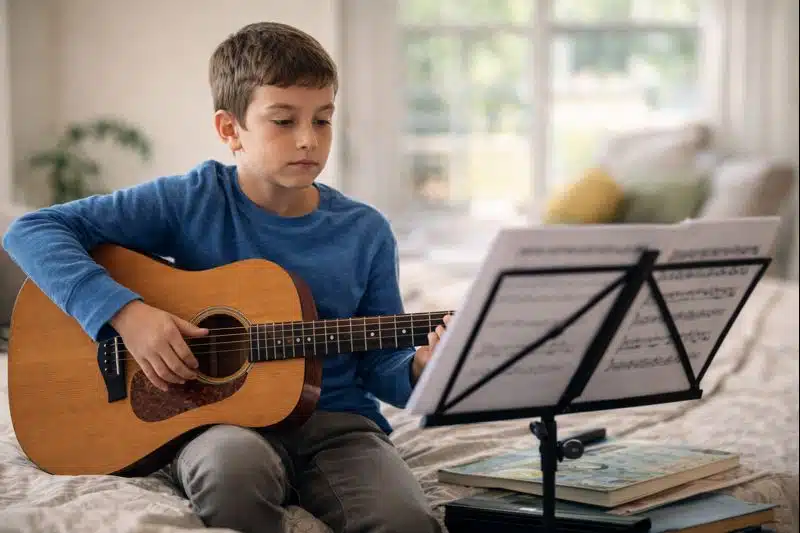
There are no shortcuts in music. Progress comes from effort, repetition, frustration, and eventual mastery. When a child finally plays something they once thought was impossible, that confidence is real—and transferable.
That child doesn’t just feel confident in music.
They feel confident facing challenges anywhere.
2. Comfort With Discomfort
Every musician learns how to:
- Start badly
- Be corrected
- Practice what feels awkward
- Perform despite nerves
This builds emotional resilience—the ability to stay steady under pressure. In adulthood, this shows up as:
- Speaking confidently in meetings
- Handling criticism without collapsing
- Persisting when something doesn’t come easily
These are life skills, not musical skills.
3. Focus in a Distracted World
Music lessons demand something increasingly rare: sustained attention.
In a culture of constant notifications and instant gratification, learning an instrument trains the brain to:
- Slow down
- Listen carefully
- Stay with a task
- Finish what was started
This kind of focus supports academic success, yes—but more importantly, it builds inner discipline that lasts long after childhood.
4. Healthy Identity Beyond Achievement
Many children grow up believing their worth comes from grades, trophies, or external praise. Music introduces a different framework:
Growth matters more than perfection.
Students learn that mistakes are part of learning—not a verdict on who they are. Over time, this fosters:
- A healthier relationship with failure
- Internal motivation
- Pride in personal progress
That mindset protects children from burnout later in life.
Performance Isn’t About Being a Star
One of the most misunderstood aspects of music education is performance.
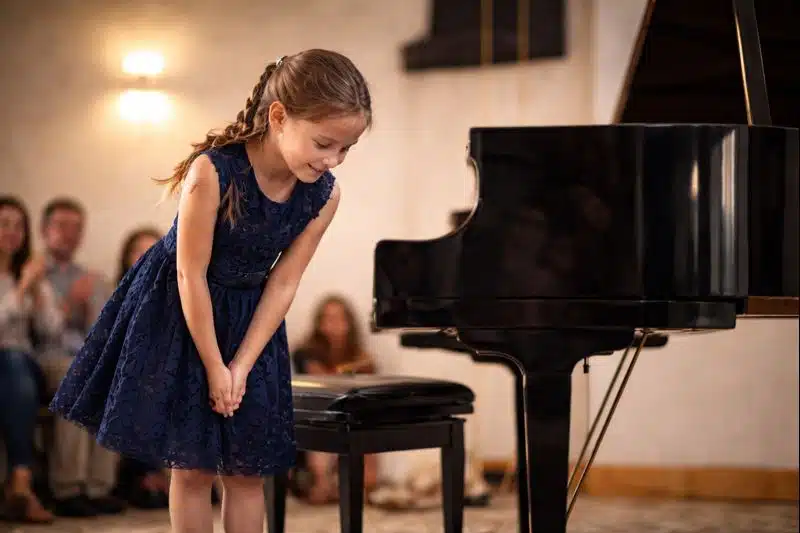
Recitals aren’t about producing concert pianists or violin soloists. They’re about helping children:
- Stand up in front of others
- Be seen and heard
- Share something meaningful they worked on
For many students, that moment on stage becomes a reference point they carry forever:
“I was nervous… and I did it anyway.”
That memory doesn’t fade. It becomes part of how they see themselves.
The Long Game: Confidence That Compounds
Here’s the part most people miss:
The benefits of music don’t peak in childhood.
They show up later:
- In college, when students manage heavy workloads
- In careers, when adults communicate clearly and persist through challenges
- In relationships, when people listen deeply and express themselves with empathy
Music trains the inner muscles that adulthood quietly demands.
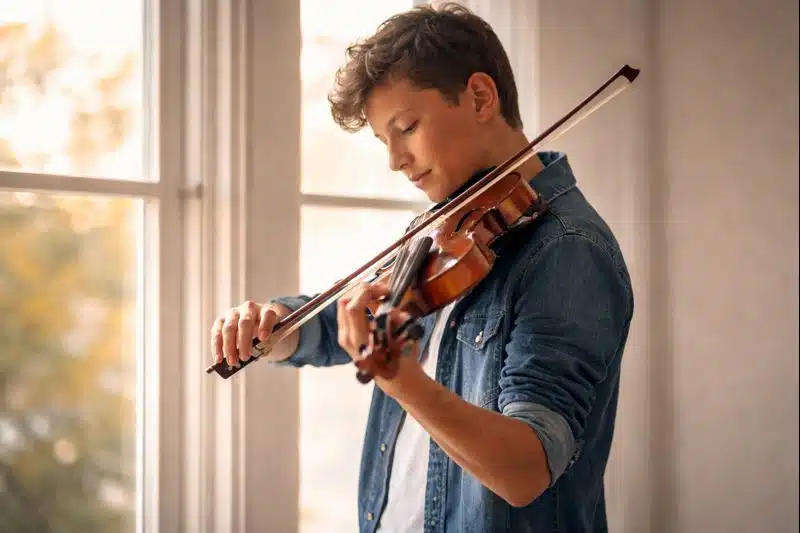
So What Is the ROI?
If we’re honest, the true return on music lessons looks like this:
- A teenager who isn’t afraid to try
- A young adult who can handle pressure
- A professional who communicates with confidence
- A human being who knows how to practice, persist, and grow
That kind of ROI doesn’t expire.
It compounds.
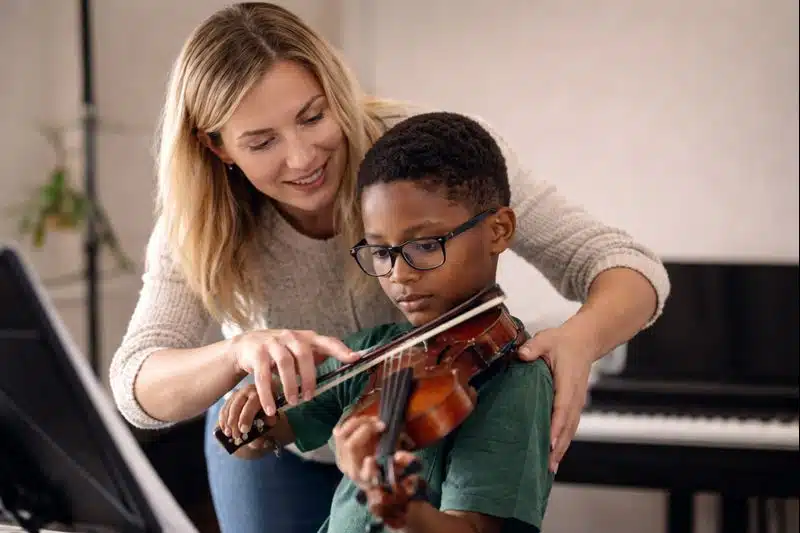
A Final Thought for Parents
You’re not investing in music lessons because your child needs to become a musician.
You’re investing because one day, when life asks something difficult of them, you want them to say:
“I’ve done hard things before. I know how to keep going.”
That is the real ROI of music lessons.
And it lasts a lifetime.
Looking for music lessons in Lexington, MA, Sharon, MA, or Cleveland, OH?